First 30 Days in Canada — A Financial Checklist for New Immigrants
The five things that matter in your first 30 days: get a Canadian phone number, apply for your SIN, open a bank account, register for provincial health coverage (and buy private interim coverage if you're in Ontario, Quebec, or Manitoba), and apply for your first credit card. Everything else can wait. Below is the exact order we recommend, the gotchas no one tells you, and the dollar costs of skipping each step.
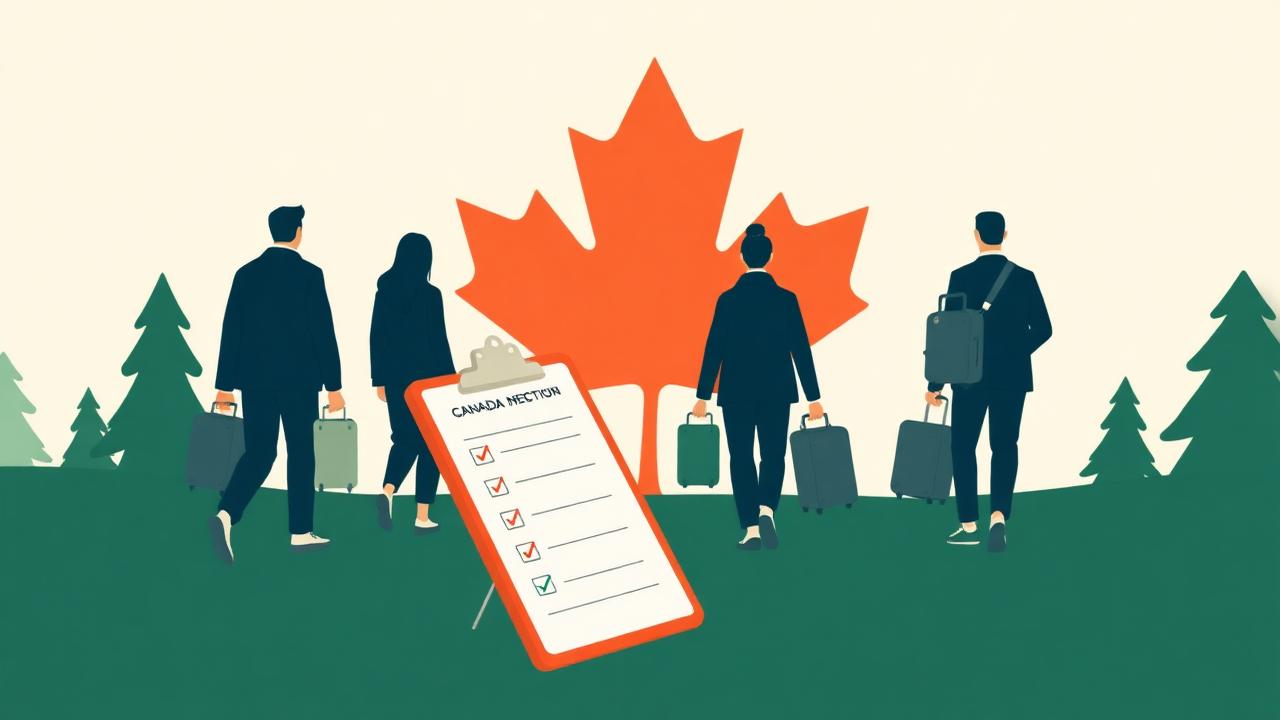
You've landed. You're tired, jet-lagged, and staring at a to-do list that could fill a notebook. Every newcomer guide tells you to "get your SIN and open a bank account" — but nobody walks you through the exact order, the province-specific waiting periods, or the traps that catch 90% of new arrivals. This is the checklist we wish existed when our team members first landed in Manitoba and Ontario in 2018 and 2021.
Week 1: The Non-Negotiables
Day 1-2: Get a Phone Number
Before anything else — even before leaving the airport — grab a prepaid SIM card. You need a Canadian phone number for literally every next step: bank account setup, SIN application follow-ups, apartment viewings, job applications. Chatr, Lucky Mobile, and Public Mobile all have plans starting around $25/month with no credit check required.
Don't sign a 2-year postpaid contract with Bell, Rogers, or Telus yet. They'll run a credit check, you'll fail (no Canadian credit history), and you'll either get denied or hit with a $500+ deposit. Get prepaid now, switch after you build credit.
Day 2-3: Apply for Your SIN
Your Social Insurance Number is your key to working legally, opening investment accounts, and filing taxes. Apply in person at a Service Canada office — bring your passport, work permit or PR confirmation, and proof of address (a hotel booking works initially). You can also apply online if you've already received your permanent resident card.
You'll usually walk out with the number the same day. Without a SIN, you can't legally start working and your employer can't set up payroll. This is genuinely urgent if you have a job lined up — book your appointment before you fly if possible.
Day 3-5: Open a Bank Account
Most big banks have newcomer packages with 1-2 years of free banking. Here's what we've seen from the major banks:
| Bank | Free Period | Credit Card | Best For |
|---|---|---|---|
| RBC | 1 year | Secured, no annual fee | Biggest branch network |
| Scotiabank | 1 year | Scene+ rewards card | StartRight program extras |
| TD | 6 months | Secured or unsecured (case-by-case) | Longest branch hours |
| BMO | 1 year | NewStart program card | Student-friendly |
| HSBC/EQ Bank | Always free | No credit card | No monthly fees ever, best HISA rates |
Compare your options in detail with our best bank for newcomers comparison.
Bring: passport, work permit or PR card, proof of address (lease, utility bill, or hotel confirmation), and your SIN if you have it already (not required to open, but they'll ask).
Week 2: Health Coverage and the Gap
Province-Specific Health Card Wait Times
This is where most newcomer guides fail — they say "apply for your health card" without mentioning that several provinces make you wait up to 3 months before coverage kicks in.
| Province | Wait Period | Notes |
|---|---|---|
| Ontario | 3 months | Buy private interim coverage — Manulife CoverMe or Blue Cross |
| British Columbia | None | Coverage starts immediately on MSP registration |
| Alberta | None | AHCIP coverage starts immediately |
| Manitoba | 3 months | Manitoba Health registration required, private insurance needed for the gap |
| Quebec | 3 months | RAMQ wait period, employer insurance may cover the gap |
If you're landing in Ontario, Manitoba, or Quebec, budget $100-$200/month for private health insurance during the wait period. The two most newcomer-friendly options are Manulife CoverMe and Blue Cross — both will cover you within 48 hours of applying. A single ER visit without coverage can cost $3,000-$10,000+. This is not optional.
See the full list of provincial health authorities on the Health Canada provincial coverage page.
Week 3: Start Building Credit
Canadian credit history doesn't transfer from any other country. You're starting at zero. This affects your ability to rent apartments, get phone contracts, get car insurance rates, and eventually qualify for a mortgage. Start building day one.
- Get a secured credit card from your bank ($300-$500 deposit). Use it for small recurring purchases — groceries, gas, your phone bill.
- Set up automatic full balance payments so you never carry a balance or miss a payment. Payment history is 35% of your credit score.
- Don't apply for multiple credit products in the first few months. Each application creates a hard inquiry that temporarily lowers your score.
After 6-12 months of on-time payments, your score should be in the 650-700 range — enough for an unsecured card and better insurance rates. Our credit card comparison includes newcomer-friendly options.
Week 4: Benefits, Tax Numbers, and What Most Guides Miss
File for Benefits Early
If you have children, apply for the Canada Child Benefit (CCB) as soon as you file your first Canadian tax return. A family with 2 kids under 6 and household income under $36,502 can receive up to $15,574/year. Even at higher incomes, the benefit is substantial — at $80,000 family income, you're still looking at roughly $8,000-$10,000/year.
Check what you qualify for with our newcomer landing checklist — it covers CCB, GST/HST credits, provincial benefits, and the Canada Workers Benefit.
What Most Guides Miss
- File taxes your first year even if you earned nothing. Filing establishes your residency date and qualifies you for GST/HST credits and CCB. You could get $500+ in quarterly GST credits just for filing.
- Get tenant insurance. It's $15-$30/month and most landlords require it. It also starts building your insurance history, which affects future home insurance rates.
- Keep every receipt. Moving expenses to Canada for work are tax-deductible if you moved at least 40 km closer to your new workplace. This can be worth $2,000-$5,000 in deductions.
Quick Decision Framework
If you do nothing else in your first 30 days, do these five things in this order:
- Prepaid phone SIM (Day 1)
- SIN application in person (Day 2-3)
- Bank account with newcomer package + secured credit card (Day 3-5)
- Provincial health card registration + private insurance if there's a wait (Week 2)
- File your first tax return when the time comes — even if you earned $0 (Tax season)
Everything else — TFSA, RRSP, investing — can wait until you're settled. Get the foundation right first. Our complete newcomer checklist and CRS score calculator are there when you're ready for the next steps.
Editorial disclaimer
This article is published by LoonieLabs for general information only. It is not financial, tax, legal, accounting, or immigration advice and must not be relied on as such. Rules, dollar figures, interest rates, and program eligibility change — always verify with the Canada Revenue Agency, IRCC, or a qualified professional before acting. Spotted an error? See our corrections policy. Last reviewed: April 14, 2026.
Frequently Asked Questions

Written and reviewed by Shrey Patel — Founder & Editor-in-Chief
Winnipeg, MB · Figures cross-checked against official immigration sources · Last reviewed April 14, 2026 · LinkedIn
Founder of LoonieLabs · based in Winnipeg, MB · writes and reviews every page on the site I oversee every figure on this page personally — verified against primary sources (CRA, IRCC, Statistics Canada, the Bank of Canada, or the originating provincial ministry). LoonieLabs has no affiliate relationships with any bank, credit card, or immigration consultant featured on this site. Spotted a mistake? Tell us.
Published by LoonieLabs.